


from web site
The relentless hum of an engine. The whine of a high-speed motor. The subtle vibrations of a meticulously crafted gearbox. Behind every smooth operation, every burst of power, and every whisper-quiet revolution lies a silent guardian of performance and reliability: rigorous testing. And at the heart of the most advanced, most accurate, and most versatile testing regimes stands a technological marvel often overlooked but utterly indispensable: the Hysteresis Dynamometer.
For engineers pushing the boundaries of electric motors, transmissions, aerospace propulsion, and cutting-edge industrial drives, the quest for truth in data is paramount. How much torque *exactly* can that new motor sustain under peak load? What happens to efficiency when that miniature turbine spins beyond 100,000 RPM? How does the electromagnetic coupling behave under brutal, rapid cycling? Guesses won't cut it. Approximations lead to failures. You need certainty. You need the uncompromising precision delivered by hysteresis dynamometer technology.
**Beyond Brake Bands and Water: Why Hysteresis Reigns Supreme**
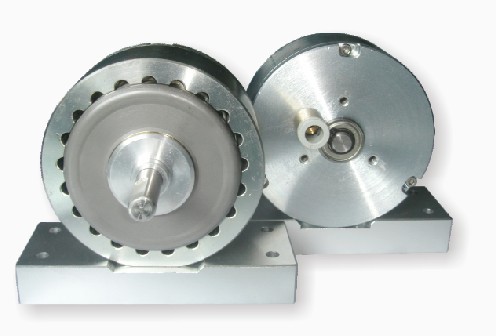
Traditional dynamometers have served their purpose, but they come shackled with limitations. Eddy current dynamometers, while fast, generate significant heat and require complex cooling, limiting sustained high-power testing. Friction-based systems (water brakes, powder brakes) wear down, introduce mechanical losses, and struggle with the fine control needed for modern, high-fidelity testing. Hydraulic systems can be powerful but are often noisy, bulky, and require significant infrastructure.
Enter the Hysteresis Dynamometer. Its core principle is elegant physics, not brute force or friction. It harnesses the power of **magnetism itself**. Imagine this: Instead of physical contact causing drag, a carefully controlled rotating magnetic field interacts with a specially designed, non-magnetic rotor. As the rotor spins within this field, the magnetic domains within the rotor material constantly realign themselves – a process called *hysteresis*. This continuous realignment requires energy, energy drawn directly from the shaft of the machine under test (MUT). This energy dissipation manifests as a smooth, controllable, and crucially, **contactless** braking torque.
Think of it like a magnetic ballet. The stator coils, precisely energized by sophisticated controllers, create the magnetic field. The rotor dances within this field, its inherent magnetic properties causing it to resist the motion, converting mechanical energy into heat within the rotor itself. No clutches. No rubbing surfaces. Just pure, controllable magnetic force.
**The Undeniable Advantages: Where Hysteresis Dynamometers Shine ✨**
Why is this technology becoming the gold standard for demanding applications? Let's delve into the compelling benefits:
1. **Absolute Torque Accuracy \u0026 Repeatability:** This is the holy grail. Without friction, wear, or complex mechanical linkages influencing the measurement, hysteresis dynamometers provide unparalleled torque accuracy. The relationship between the applied magnetic field (precisely controlled via current) and the generated torque is inherently linear and predictable. Calibration is stable over time, and results are astonishingly repeatable, test after test after test. When you're validating a motor for a critical medical device or an aerospace actuator, this level of trust is non-negotiable.
2. **Zero Wear \u0026 Ultra-Long Life:** No contact means no wear. The rotor spins freely within an air gap. There are servo press to replace, no friction surfaces to resurface, no hydraulic seals to leak. This translates directly into dramatically lower maintenance costs, minimal downtime, and a significantly longer operational lifespan. Your capital investment pays dividends for years.
3. **Inherently Smooth \u0026 Vibration-Free Operation:** The contactless nature delivers butter-smooth torque application and absorption. There's no grabbing, no stick-slip phenomena common in friction brakes, no pulsations from hydraulic systems. This smoothness is critical for:
* **High-Speed Testing:** Hysteresis dynamometers excel at speeds far exceeding other technologies, often reaching 100,000 RPM or more with the right design. They remain stable and controllable where others become unstable or destructively resonant. Imagine testing micro-turbines or ultra-high-speed spindles without fear.
* **Low Torque / Low Speed Precision:** Equally impressive is their ability to apply and measure minute torques accurately at very low speeds, even down to zero speed (locked rotor testing). Testing servo motors, fine-positioning actuators, or low-torque sensors becomes effortless. ⚖️
* **Vibration-Sensitive Testing:** Characterizing the NVH (Noise, Vibration, Harshness) signature of a component requires a test rig that doesn't introduce its own noise. The smooth, quiet operation of hysteresis systems makes them ideal.
4. **Exceptional Dynamic Response:** Need to simulate the brutal shock load of an electric vehicle's regenerative braking snapping on? Or the rapid torque reversals in a robotic joint? Hysteresis dynamometers boast incredibly fast torque response times. Because torque is generated electromagnetically, changes can be effected almost instantaneously by altering the control current. This dynamic capability allows for realistic simulation of transient conditions and rigorous durability testing sequences that other dynamometers simply cannot replicate faithfully.
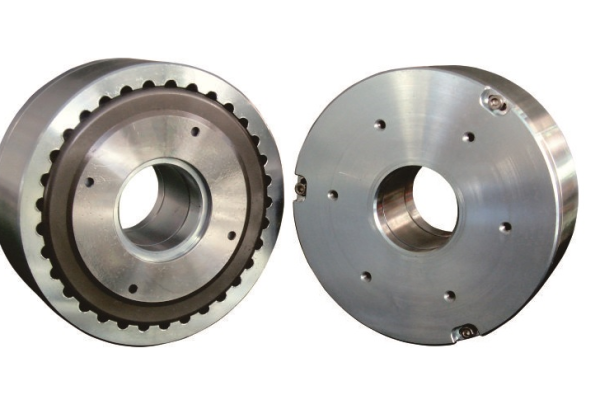
5. **Broad Operating Range:** One dynamometer, vast possibilities. Hysteresis systems naturally offer a wide constant-torque range. Within their design power and speed envelope, they can accurately and smoothly apply torque from near-zero up to their rated maximum. This versatility eliminates the need for multiple dynamometers or complex gearboxes for different test phases, streamlining your test cell setup.
6. **Four-Quadrant Operation (Regenerative Capability):** Advanced hysteresis dynamometer systems seamlessly operate in all four quadrants of the torque/speed plane. They can absorb power (motoring the MUT) or supply power (driving the MUT). Crucially, during braking (absorption), the energy isn't just dumped as heat through a resistor bank (like many eddy current systems). Instead, a regenerative drive system captures the braking energy and feeds it back into the facility's AC mains. This dramatically reduces operating costs (especially for high-power, continuous testing), minimizes cooling requirements, and is significantly more environmentally friendly.
**Unlocking Applications: Where Precision Makes the Difference
